Things to Do in Nusa Penida: Sand, Mountains & Day Trips
Written by: VFS Global | Updated: August 10, 2026


Nusa Penida has quickly become one of Indonesia's most sought-after island destinations. Located just off the south-east coast of Bali, the island is famous for its dramatic cliffs, turquoise waters, stunning viewpoints and rich marine life.
While many travellers visit as a day trip from Bali, Nusa Penida offers enough natural beauty and adventure to justify a longer stay. From world-famous beaches and scenic coastal formations to snorkelling with manta rays, the island provides some of the most memorable experiences in Indonesia.
For Indian travellers looking to explore beyond Bali's resorts and busy tourist areas, Nusa Penida offers a rugged and scenic escape that showcases a different side of Indonesia.
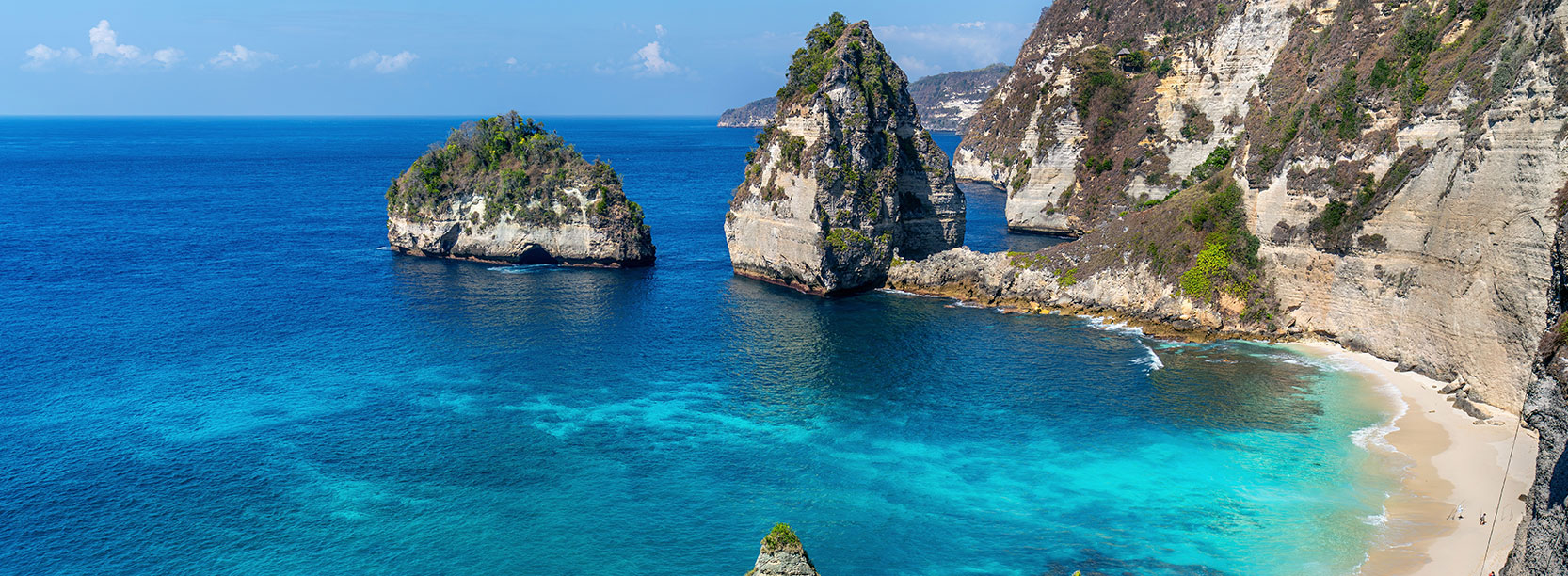
Nusa Penida is the largest of three islands located south-east of Bali, alongside Nusa Lembongan and Nusa Ceningan.
The island lies approximately 25 kilometres from Bali and can be reached by fast boat from popular departure points including Sanur.
Unlike Bali, Nusa Penida remains relatively undeveloped in many areas. Steep coastal cliffs, winding roads and dramatic viewpoints have helped preserve the island's natural beauty, making it particularly popular with photographers, nature enthusiasts and adventure travellers.
Visitors come to Nusa Penida to experience:

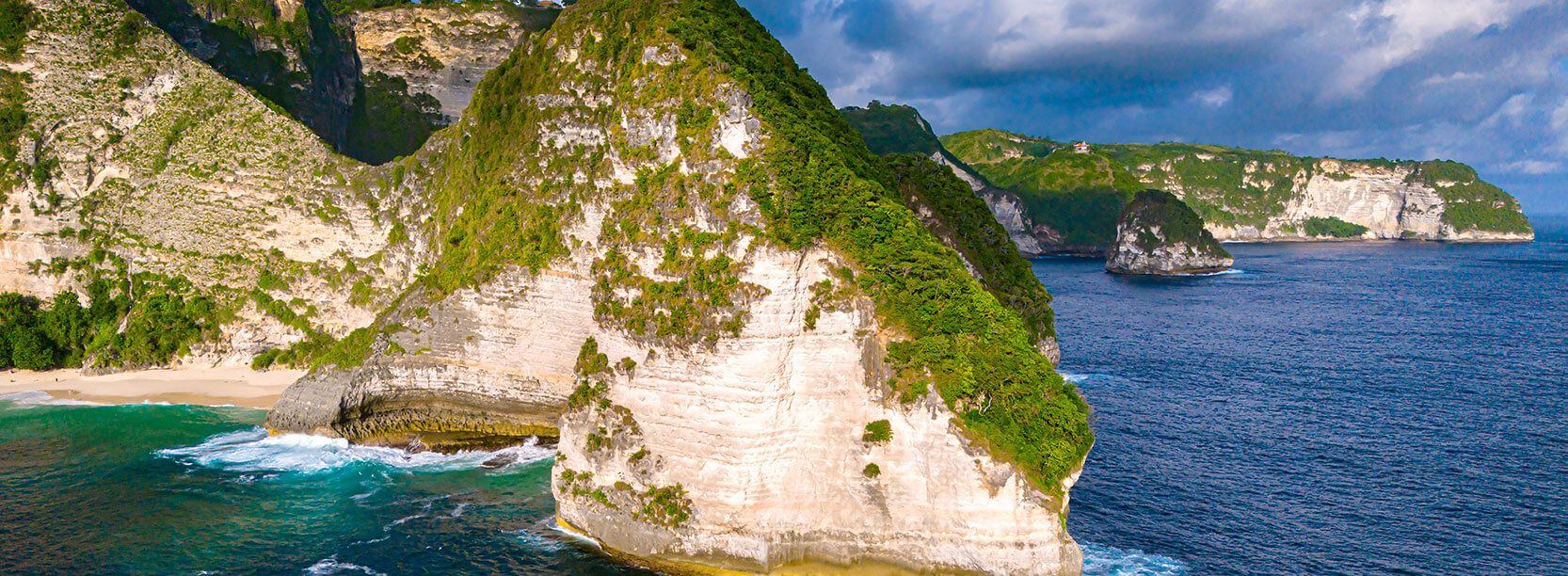
Kelingking Beach is undoubtedly Nusa Penida's most famous attraction and one of the most photographed locations in Indonesia.
The viewpoint overlooks a dramatic limestone headland that resembles the shape of a Tyrannosaurus rex, earning it the nickname "T-Rex Cliff". The breathtaking view of turquoise water and towering cliffs has made Kelingking Beach an icon of Indonesian tourism.
Visitors can enjoy the panoramic viewpoint or take the challenging descent to the beach below. The hike requires caution due to steep terrain, but rewards visitors with one of the island's most spectacular beaches.
Highlights
Located on Nusa Penida's western coast, Angel's Billabong and Broken Beach are often visited together.
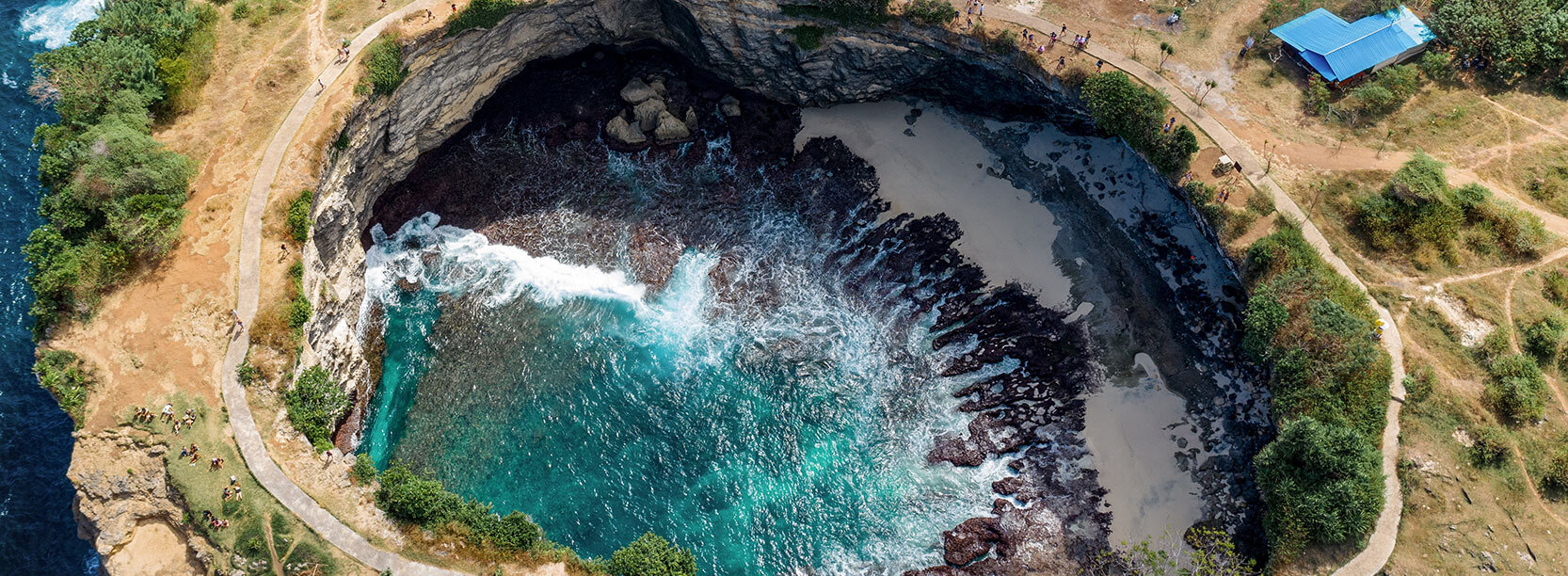
Angel's Billabong is a natural infinity pool formed by volcanic rock along the coastline. During calm conditions, visitors can admire the clear water and unique rock formations.
The colours of the water range from emerald green to deep blue depending on sunlight and tidal conditions.
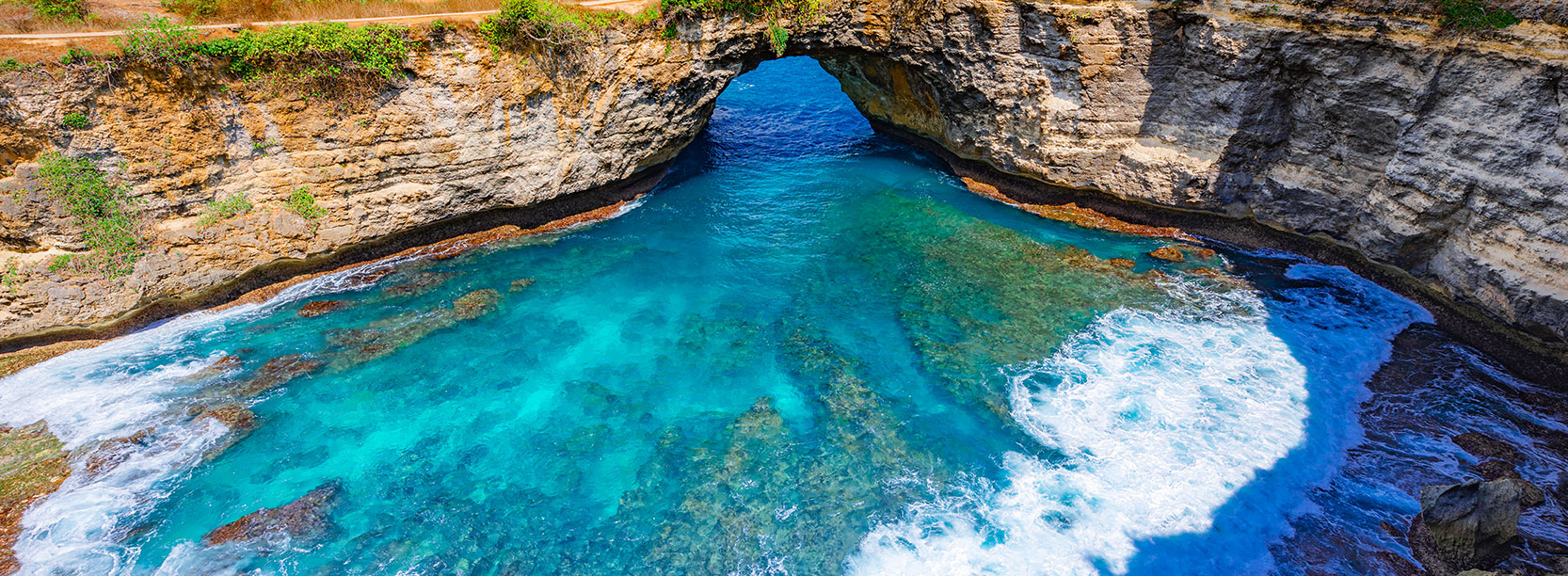
A short walk away is Broken Beach, known locally as Pasih Uug. This natural coastal arch was formed when part of a sea cave collapsed, creating a circular bay connected to the ocean through a dramatic opening.
Although swimming is not permitted, the scenery makes it one of Nusa Penida's most popular viewpoints.
Highlights
One of the most exciting experiences in Nusa Penida is the opportunity to snorkel with manta rays.
These gentle giants can often be seen around Manta Point and other nearby sites, particularly during favourable sea conditions.
Manta rays can have wingspans of several metres, creating unforgettable encounters for snorkellers and divers.
Popular snorkelling locations include:
In addition to manta rays, visitors may encounter:
Many tour operators offer half-day and full-day snorkelling excursions that combine several locations.
Highlights
Located on Nusa Penida's eastern coastline, Diamond Beach has become one of the island's most impressive attractions.
The beach is famous for its white sand, turquoise waters and towering limestone formations rising dramatically from the ocean.
A series of carved stairs allows visitors to descend to the beach, where the scenery feels remarkably untouched.
Nearby attractions include:
Many travellers combine these locations into a single day exploring eastern Nusa Penida.
Highlights
One of the most common questions travellers ask is whether Nusa Penida should be visited as a day trip or an overnight stay.
A day trip is suitable for visitors with limited time.
Most organised tours cover key attractions such as:
The main advantage is convenience, especially for travellers based in Bali.
Spending one or more nights on Nusa Penida allows travellers to experience the island at a more relaxed pace.
Benefits include:
Many travellers find that two or three nights provide enough time to fully appreciate the island.
The most common way to reach Nusa Penida is via fast boat from Bali.
Popular departure points include:
Journey times typically range between 30 and 60 minutes depending on sea conditions and departure location.
Once on Nusa Penida, visitors can explore using:
Road conditions have improved significantly in recent years, but some routes remain steep and challenging.
Travellers unfamiliar with local driving conditions may prefer hiring a driver for greater comfort and convenience.
The best time to visit Nusa Penida is during Indonesia's dry season, which generally runs from May to October.
During these months, visitors can expect:
July and August are typically the busiest months, while May, June, September and October offer a good balance of favourable weather and fewer visitors.
Planning a trip to Nusa Penida? Before travelling to Indonesia, check the latest entry requirements and confirm your eligibility for an Electronic Visa on Arrival (e-VoA).
Applying online before departure can help make your arrival process smoother and allow you to focus on planning your island adventure. Always refer to official Indonesian immigration channels for the latest visa requirements, entry regulations and travel updates before travelling.
